Power Distribution Awareness
Course Program



Course Description
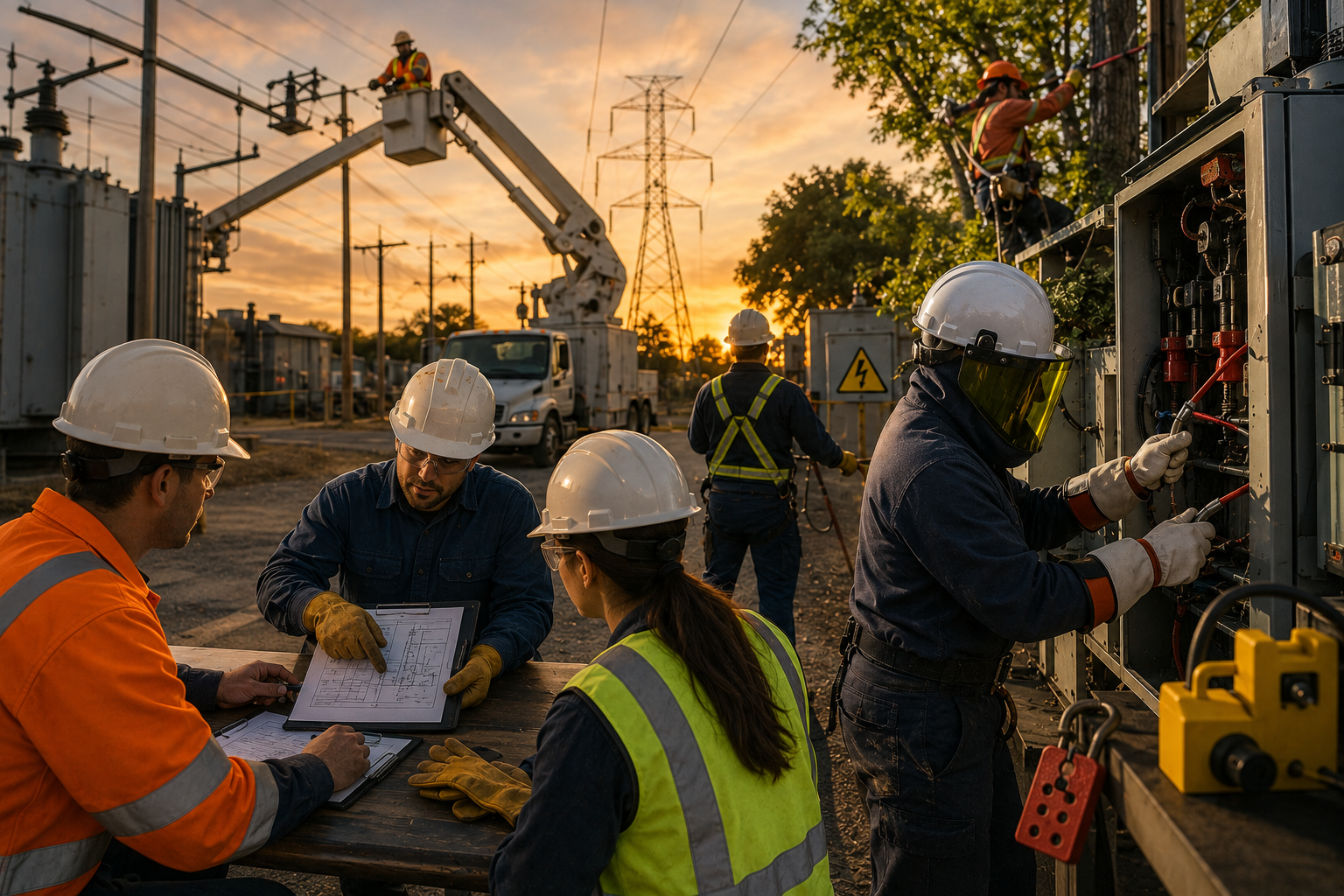
This training provides essential knowledge on OSHA 29 CFR 1910.269 standards for the safe operation and maintenance of electric power generation, transmission, and distribution systems. Participants will learn hazard prevention, proper use of PPE, and best practices to ensure compliance and protect lives.
- Safe operation and maintenance of power generation, transmission, and distribution equipment
- Protection against hazards like electric shock, arc flash, burns, and falls
- Applicability to qualified employees working on energized systems
- Coverage of power plants, substations, transmission lines, and distribution systems
- Related equipment: communication, metering, fuel handling, and line-clearance tree trimming
- Exclusions: general building electrical systems and construction work
- Providing a hazard-free workplace and proper PPE
- Ensuring employee training, hazard assessments, and job briefings
- Identifying live parts, nominal voltages, and minimum approach distances
- Proper use of insulating tools, shielding, and PPE
- Proactive hazard recognition and mitigation
- Assessing arc flash hazards and estimating heat energy exposure
- Providing flame-resistant clothing with appropriate arc ratings
- Preventing use of flammable materials near energized parts
- Safety provisions for qualified and non-qualified employees
- Preventing contact with energized lines during vegetation management
- Regular refresher training and competency evaluations
- Job hazard analysis (JHA) and pre-job briefings
- Lockout/tagout procedures and continuous safety improvement
Certifications Obtained Upon Completion
Certificate of Completion for Power Distribution Awareness Training
Regulatory Citations
OSHA 29 CFR 1910.269: Electric Power Generation, Transmission, and DistributionOSHA Lockout/Tagout Standard (29 CFR 1910.147)
Additional Notes
This course is ideal for qualified employees working in power generation, transmission, and distribution systems.Emphasis is placed on compliance, hazard prevention, and fostering a culture of safety to reduce risks and save lives.