
Logger Safety
Course Program



Course Description
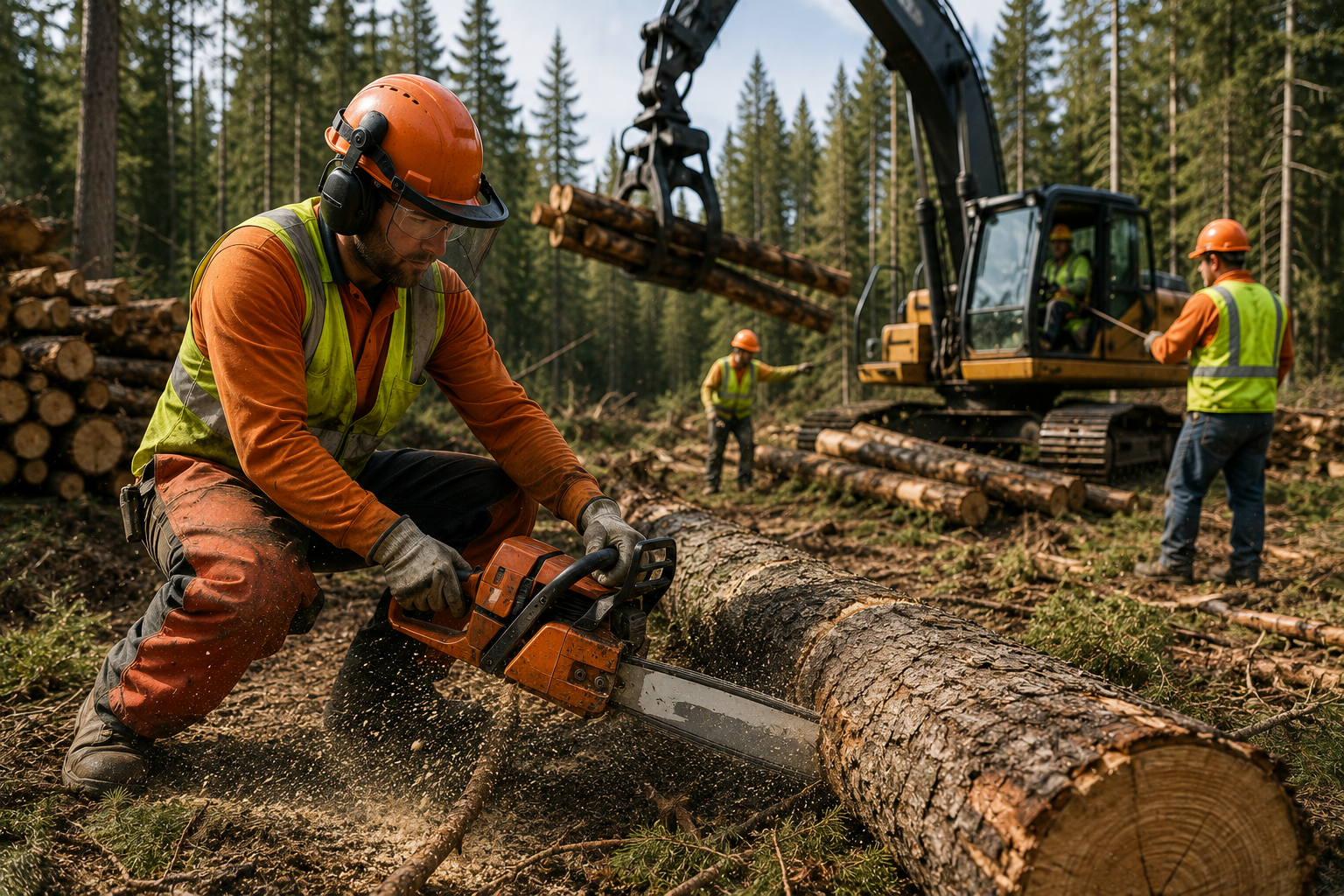
This training provides essential knowledge on OSHA’s Logger Safety Standards (29 CFR 1910.266) to protect workers in one of the most hazardous industries. Participants will learn about personal protective equipment (PPE), machine safety, emergency preparedness, and safe logging practices to reduce risks and ensure compliance.
-
Introduction to Logger Safety
- Understand the hazards commonly associated with logging operations and forestry work.
- Recognize the importance of following safe work practices during timber harvesting and related activities.
- Identify employer and employee responsibilities for maintaining a safe logging work environment.
-
Personal Protective Equipment (PPE)
- Identify required personal protective equipment for logging operations.
- Understand the proper use, inspection, and maintenance of protective equipment.
- Recognize the importance of cut-resistant leg protection, eye protection, hearing protection, head protection, and high-visibility apparel.
-
Logging Equipment and Vehicle Safety
- Understand safety requirements for logging machinery, vehicles, and mobile equipment.
- Recognize the purpose of protective structures, seat belts, guards, and other safety features.
- Learn inspection and maintenance practices that support safe equipment operation.
-
First Aid and Emergency Preparedness
- Understand first-aid requirements for logging operations and remote work locations.
- Recognize the importance of emergency communication systems and response planning.
- Learn procedures for obtaining medical assistance and transporting injured workers.
-
Environmental and Work Area Hazard Management
- Identify environmental conditions that can create additional risks during logging operations.
- Recognize hazards associated with severe weather, unstable terrain, and dangerous trees.
- Understand communication and signaling procedures used to maintain worker safety.
-
Hand and Portable Powered Tool Safety
- Apply safe operating practices when using chain saws and other powered tools.
- Understand tool inspection, maintenance, and safety feature requirements.
- Recognize hazards associated with improper tool use and inadequate maintenance.
-
Tree Harvesting Operations
- Understand safe procedures for felling, bucking, limbing, chipping, yarding, and transporting timber.
- Recognize tree-related hazards, including lean, tension, compression, and overhead dangers.
- Apply work practices that reduce the risk of injury during harvesting operations.
-
Safe Work Practices and Operational Controls
- Maintain safe distances between workers, equipment, and active work zones.
- Understand procedures for coordinating logging activities and managing site hazards.
- Recognize the importance of continuous hazard awareness throughout the workday.
-
Training, Communication, and Safety Culture
- Understand training requirements for logging employees before beginning work activities.
- Recognize the value of ongoing safety meetings, communication, and refresher training.
- Promote a culture of safety through employee involvement, hazard reporting, and continuous improvement.
Certifications Obtained Upon Completion
Certificate of Completion for Logger Safety Training
Regulatory Citations
OSHA Logging Operations Standard (29 CFR 1910.266)
Additional Notes
This course is ideal for workers and supervisors in the logging industry, including timber, pulpwood, and pole operations.Emphasis is placed on hazard prevention, emergency preparedness, and compliance with OSHA standards to ensure a safer work environment.