
Laboratory Safety-Biological
Course Program



Course Description
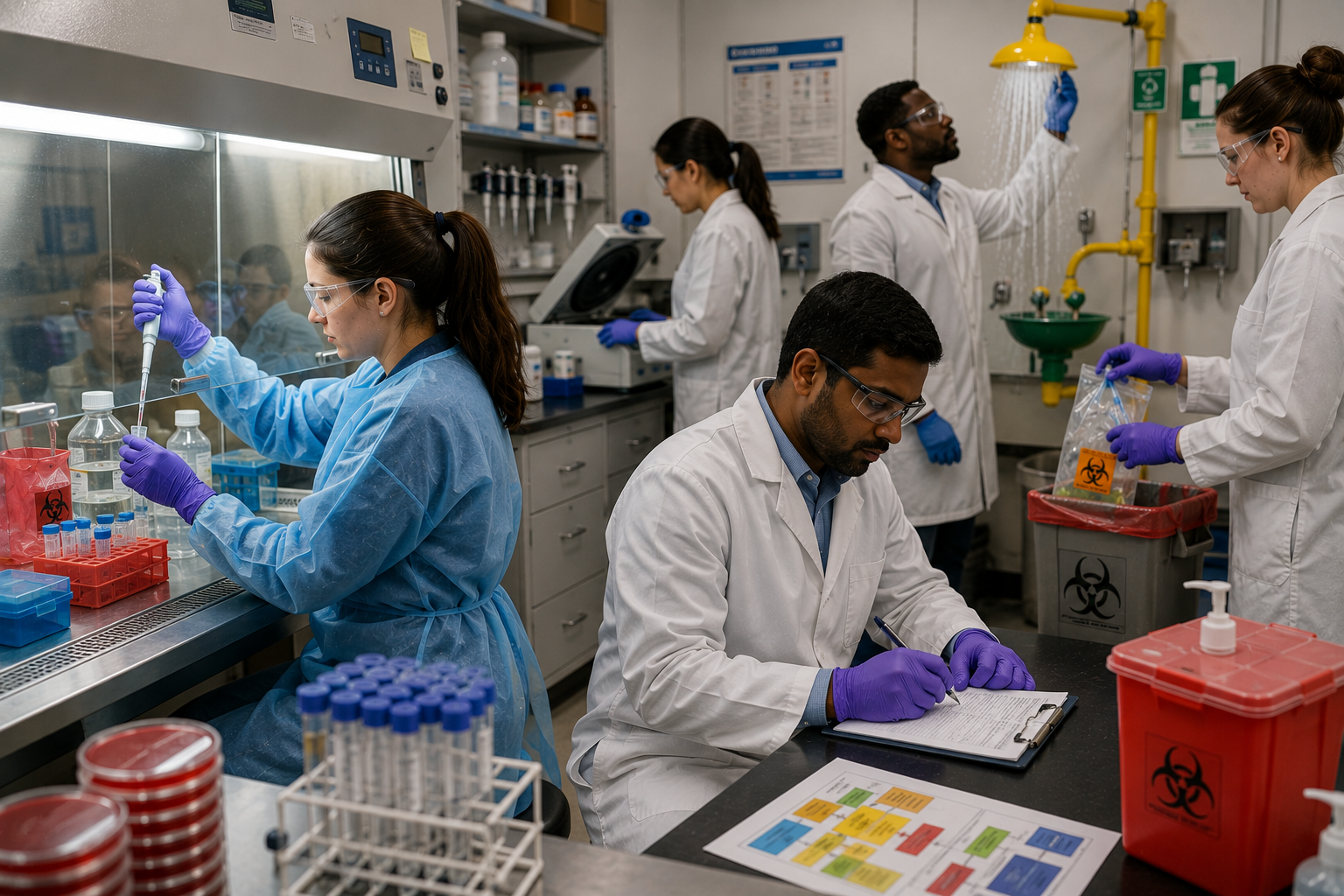
This training provides essential knowledge on biological laboratory safety, focusing on biosafety levels, personal protective equipment (PPE), safe practices, and emergency response. Participants will learn how to handle biological hazards responsibly to protect themselves, their colleagues, and the environment.
-
Importance of Laboratory Safety
- Understand the biological, chemical, and physical hazards commonly encountered in laboratory environments.
- Recognize the importance of maintaining safe work practices to prevent injuries, illnesses, contamination, and exposure incidents.
- Understand the shared responsibility of all laboratory personnel in maintaining a safe workplace.
-
Biosafety Levels and Laboratory Containment
- Understand the purpose and characteristics of Biosafety Levels (BSL-1 through BSL-4).
- Recognize the containment requirements and safety controls associated with different biological hazards.
- Identify how biosafety levels influence laboratory procedures, equipment, and facility design.
-
Personal Protective Equipment (PPE)
- Identify appropriate personal protective equipment for laboratory activities.
- Understand the proper selection, use, inspection, and removal of PPE.
- Recognize additional protective measures required when handling biological materials and potentially infectious substances.
-
Safe Laboratory Work Practices
- Apply safe laboratory procedures to minimize the risk of exposure and contamination.
- Understand aseptic techniques and universal precautions for handling biological materials.
- Maintain organized work areas and recognize activities that are prohibited in laboratory environments.
-
Biological and Chemical Hazard Controls
- Identify common biological and chemical hazards found in laboratories.
- Understand the proper use of biosafety cabinets, chemical fume hoods, and other engineering controls.
- Recognize procedures for minimizing exposure and preventing contamination.
-
Incident Reporting and Hazard Communication
- Understand the importance of promptly reporting spills, accidents, exposures, and equipment malfunctions.
- Learn procedures for communicating hazards and responding to unsafe conditions.
- Recognize the role of documentation in maintaining laboratory safety and compliance.
-
Emergency Preparedness and Response
- Identify the location and proper use of emergency equipment, including eyewash stations, safety showers, and fire extinguishers.
- Understand emergency procedures for chemical splashes, biological exposures, fires, and other laboratory incidents.
- Recognize when evacuation or additional emergency assistance is required.
-
Waste Management and Disposal Procedures
- Understand procedures for the safe handling and disposal of biological, chemical, and laboratory waste.
- Recognize requirements for disposing of sharps, broken glass, contaminated materials, and preserved specimens.
- Apply waste management practices that protect personnel, the public, and the environment.
-
Teamwork, Responsibility, and Workplace Safety Culture
- Promote professional conduct, communication, and cooperation among laboratory personnel.
- Recognize the importance of individual accountability in maintaining laboratory safety.
- Understand special considerations for personnel who may require additional protections due to specific health or workplace circumstances.
Certifications Obtained Upon Completion
Certificate of Completion for Biological Laboratory Safety Training
Regulatory Citations
OSHA Laboratory Standard (29 CFR 1910.1450)CDC Biosafety in Microbiological and Biomedical Laboratories (BMBL) Guidelines
Additional Notes
This course is ideal for laboratory workers, students, and researchers handling biological materials.Emphasis is placed on practical application, emergency preparedness, and fostering a culture of safety in the lab.