
Job Hazard Analysis
Course Program



Course Description
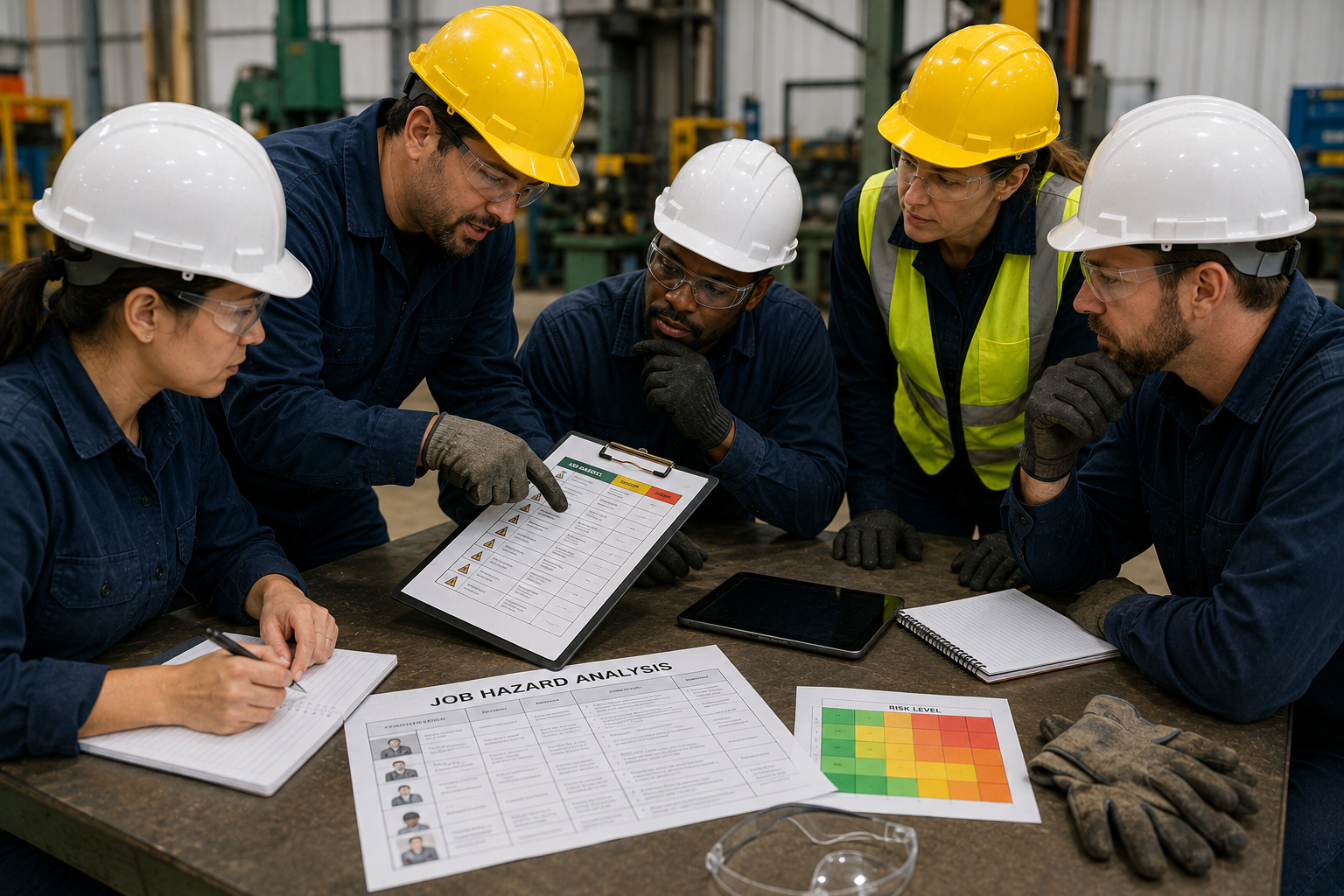
This training provides a comprehensive understanding of Job Hazard Analysis (JHA) as a proactive tool to identify and control workplace risks. Participants will learn the 5-step JHA process, hazard identification techniques, and control measures to create a safer and more productive work environment.
- Introduction to Job Hazard Analysis (JHA)
- Understand the purpose and benefits of Job Hazard Analysis (JHA), Job Safety Analysis (JSA), and Activity Hazard Analysis (AHA).
- Learn how workers, tasks, tools, equipment, and the work environment interact to create workplace risks.
- Recognize the role of JHA programs in preventing injuries and improving workplace safety.
- The Importance of Conducting a JHA
- Understand how hazard analysis helps reduce workplace injuries, illnesses, and incidents.
- Recognize employer responsibilities for providing a safe and healthful workplace.
- Learn how effective hazard management can improve productivity, employee engagement, and operational performance.
- Selecting and Analyzing Job Tasks
- Identify jobs and activities that should be prioritized for hazard analysis.
- Understand how to select tasks based on risk, incident history, complexity, or changes in work processes.
- Learn how to break a job into clear and manageable steps for evaluation.
- Hazard Identification Techniques
- Recognize potential hazards associated with each step of a job or task.
- Identify physical, chemical, biological, ergonomic, environmental, and operational hazards.
- Apply questioning techniques and observation methods to uncover hidden or overlooked risks.
- Risk Assessment and Hazard Evaluation
- Evaluate the likelihood and severity of identified hazards.
- Determine which hazards present the greatest risk to workers and operations.
- Prioritize corrective actions based on risk levels and potential consequences.
- Hierarchy of Controls
- Understand the hierarchy of controls and its role in reducing workplace risk.
- Apply engineering controls to eliminate or reduce hazards at their source.
- Implement administrative controls and safe work practices to further reduce exposure.
- Recognize the appropriate use of personal protective equipment as the final layer of protection.
- Implementing and Monitoring Control Measures
- Develop and implement practical solutions to control identified hazards.
- Communicate hazard controls and safe work procedures to affected personnel.
- Monitor the effectiveness of control measures and make improvements when necessary.
- Documentation and Continuous Improvement
- Document job steps, identified hazards, and selected control measures accurately.
- Review and update JHAs when equipment, procedures, personnel, or workplace conditions change.
- Maintain records that support compliance and continuous safety improvement efforts.
- Employee Involvement and Safety Culture
- Encourage employee participation in hazard identification and risk reduction activities.
- Promote accountability and ownership of workplace safety responsibilities.
- Understand how effective JHA programs contribute to a proactive and positive safety culture.
Certifications Obtained Upon Completion
Certificate of Completion for Job Hazard Analysis Training
Regulatory Citations
OSHA General Duty Clause (Section 5(a)(1))OSHA Standards for Hazard Identification and Risk Assessment (29 CFR 1910)
Additional Notes
This course is ideal for employees, supervisors, and safety professionals responsible for workplace safety and risk management.Emphasis is placed on practical application, including hands-on exercises to create and evaluate JHAs for real-world tasks.