
Hot Work Massachusetts Certified
Course Program



Course Description
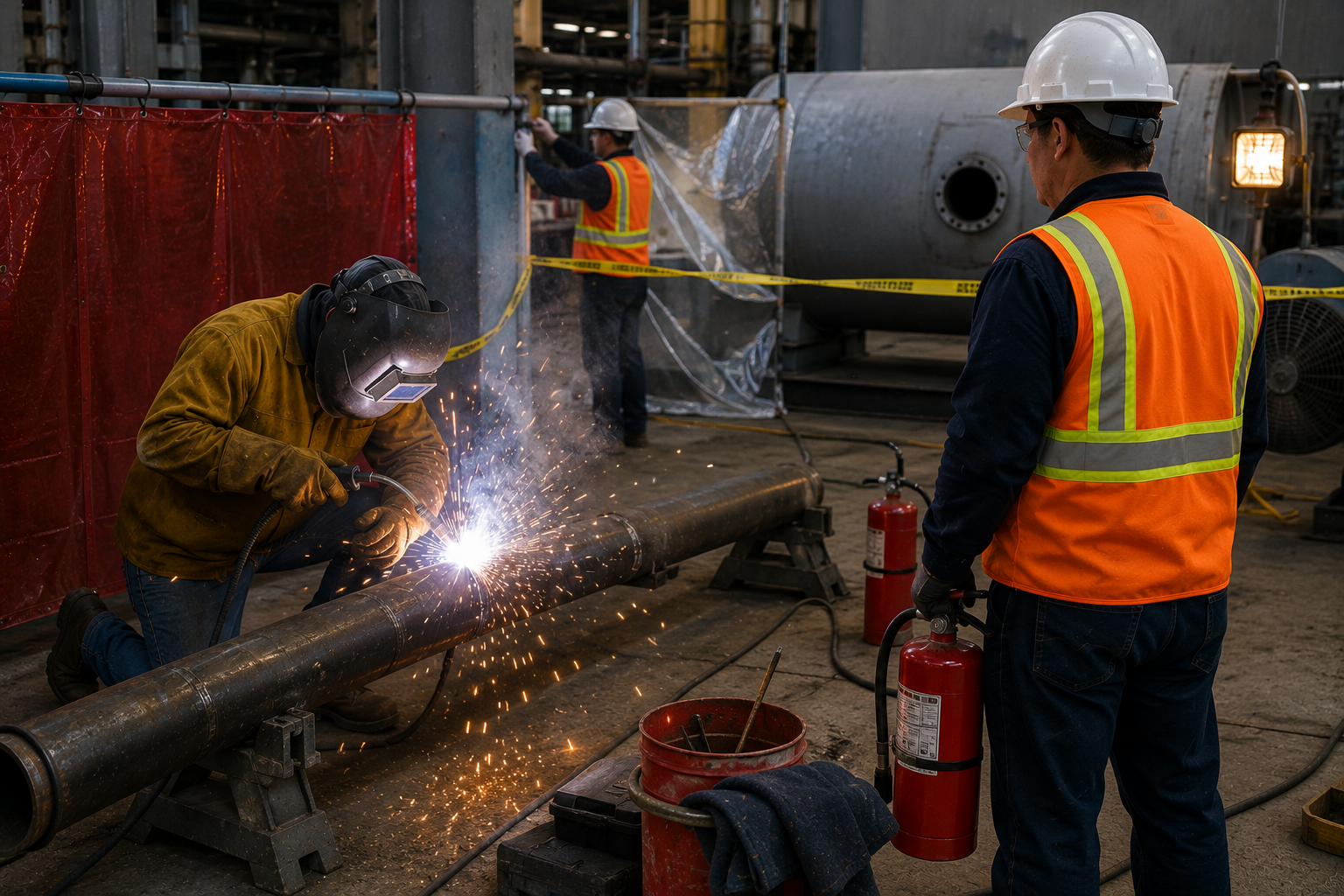
This Massachusetts-certified Hot Work training ensures compliance with the state’s new Hot Work requirements. Participants will learn fire prevention, permitting processes, and OSHA and NFPA standards to safely conduct hot work operations in various environments.
-
Hot Work Regulations and Industry Standards
- Review the Massachusetts Fire Code requirements governing hot work operations.
- Understand applicable OSHA, NFPA, and ANSI standards related to welding, cutting, brazing, and other hot work activities.
- Recognize employer and employee responsibilities for maintaining regulatory compliance.
-
Understanding Hot Work Hazards
- Identify common hot work activities and the hazards associated with each process.
- Recognize ignition sources, combustible materials, and conditions that can lead to fires or explosions.
- Understand the risks posed by sparks, slag, heat transfer, and hot surfaces.
-
Roles and Responsibilities
- Define the responsibilities of hot work operators, fire watches, supervisors, and permit authorizers.
- Understand accountability for hazard assessments, permit compliance, and fire prevention measures.
- Recognize the importance of communication and coordination before, during, and after hot work operations.
-
Hot Work Permit Procedures
- Understand the purpose and requirements of a hot work permit system.
- Learn the steps required to obtain, complete, and close a hot work permit.
- Review Massachusetts-specific permitting requirements and documentation practices.
-
Hazard Identification and Fire Prevention
- Conduct pre-job assessments to identify fire, explosion, and exposure hazards.
- Implement fire prevention measures, including removal or protection of combustible materials.
- Understand requirements for fire watches, fire extinguishers, and post-work monitoring.
-
Confined Space Hot Work Operations
- Recognize the additional hazards associated with performing hot work in confined spaces.
- Understand ventilation, atmospheric monitoring, and entry requirements.
- Apply safe work practices to reduce fire, explosion, and exposure risks in confined environments.
-
Special Hot Work Applications
- Understand safety considerations for public exhibitions, demonstrations, and temporary hot work operations.
- Recognize unique hazards associated with specialized hot work processes and locations.
- Implement appropriate controls to protect workers, occupants, and the public.
-
Safe Work Practices and Emergency Preparedness
- Apply industry best practices for conducting hot work safely.
- Understand emergency response procedures for fires, injuries, and hazardous conditions.
- Promote a proactive safety culture through planning, training, and continuous hazard awareness.
Certifications Obtained Upon Completion
Massachusetts Hot Work Certification (State-Approved Program)
Regulatory Citations
Massachusetts Fire Code (527 CMR 1.00 Chapter 41)OSHA Welding, Cutting, and Brazing Standards (29 CFR 1910.252 Subpart Q)NFPA 51B: Standard for Fire Prevention During Welding, Cutting, and Other Hot WorkNFPA 241: Standard for Safeguarding Construction, Alteration, and Demolition OperationsANSI Z49: Safety in Welding, Cutting, and Allied Processes
Additional Notes
This course is ideal for workers, supervisors, and sole proprietors conducting hot work in Massachusetts.Emphasis is placed on fire prevention, hazard identification, and compliance with state and federal regulations to ensure safe and lawful operations.