
Hazardous Materials Labeling
Course Program



Course Description
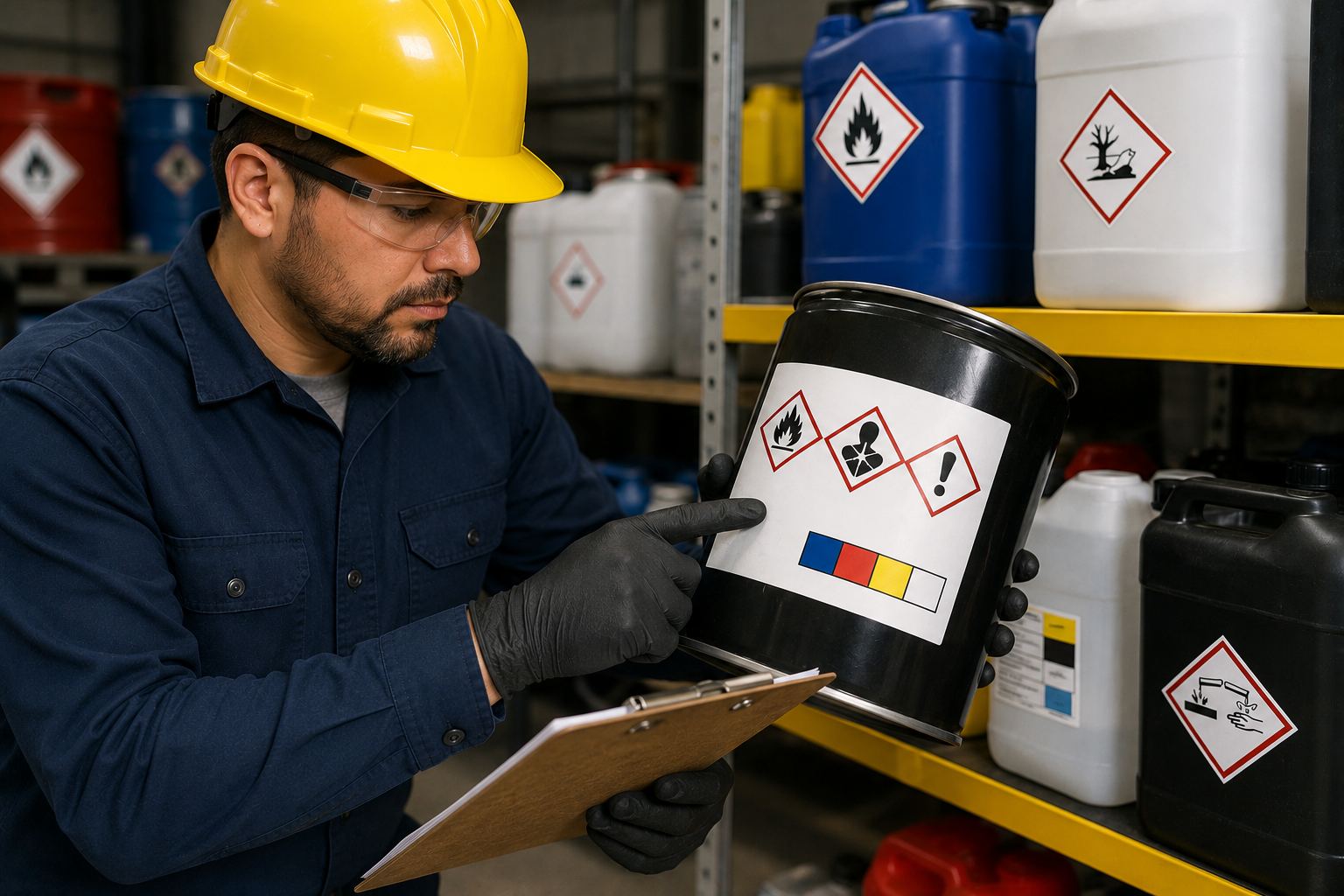
This training focuses on the critical role of proper labeling in the safe handling, storage, and transportation of hazardous materials. Participants will learn to identify and apply appropriate hazard labels, understand color coding, and comply with OSHA and DOT labeling requirements.
- Introduction to Hazardous Materials Labeling
- Understand the purpose of hazardous materials labeling in protecting employees, the public, and the environment.
- Recognize the importance of accurate labeling for hazard communication and regulatory compliance.
- Identify how labeling systems support the safe handling, storage, and transportation of hazardous materials.
- Hazard Communication and Labeling Systems
- Understand the role of hazard communication programs in workplace safety.
- Recognize the different labeling systems used for hazardous materials.
- Apply label information to identify hazards and implement appropriate safety precautions.
- Identifying Hazard Labels and Pictograms
- Recognize common hazard labels, symbols, and pictograms used to communicate chemical hazards.
- Interpret label elements to identify physical, health, and environmental hazards.
- Use label information to support safe handling and emergency response activities.
- OSHA, DOT, and GHS Labeling Requirements
- Understand the purpose and application of OSHA, DOT, and GHS labeling systems.
- Recognize key differences between workplace and transportation hazard communication requirements.
- Apply appropriate labeling requirements based on the intended use and location of hazardous materials.
- Color Coding and Hazard Identification
- Understand how color-coding systems are used to communicate hazard information.
- Recognize color identifiers associated with specific hazard categories.
- Apply color-labeling practices to improve hazard recognition and workplace safety.
- Workplace Labeling Practices
- Understand labeling requirements for hazardous materials used and stored in the workplace.
- Recognize when workplace-specific labels are required.
- Maintain labeling practices that support employee awareness and regulatory compliance.
- Storage and Shipping Label Requirements
- Differentiate between labeling requirements for storage and transportation activities.
- Recognize hazards associated with improperly labeled materials during storage and shipment.
- Apply appropriate labeling standards to support safe movement and storage of hazardous materials.
- Secondary Containers and Transfer Operations
- Understand requirements for labeling secondary containers and transferred materials.
- Recognize situations where additional labeling or identification may be necessary.
- Apply procedures that maintain hazard communication when chemicals are transferred between containers.
- Label Inspection and Maintenance
- Ensure labels remain legible, accurate, and securely attached to containers.
- Recognize environmental and workplace conditions that may damage or obscure labels.
- Implement inspection and replacement procedures to maintain effective hazard communication.
- Training, Compliance, and Continuous Improvement
- Understand employee responsibilities for recognizing and following hazardous material labeling requirements.
- Support compliance through training, inspections, and routine audits.
- Promote a culture of safety through effective hazard communication and continuous improvement.
Certifications Obtained Upon Completion
Certificate of Completion for Hazardous Materials Labeling Training
Regulatory Citations
OSHA Hazard Communication Standard (29 CFR 1910.1200)DOT Hazardous Materials Regulations (49 CFR Parts 171-180)GHS Guidelines for Classification and Labeling of Chemicals
Additional Notes
This course is ideal for employees and supervisors responsible for handling, storing, or transporting hazardous materials.Emphasis is placed on compliance, hazard communication, and ensuring workplace and transportation safety through proper labeling practices.