
Farm Safety
Course Program
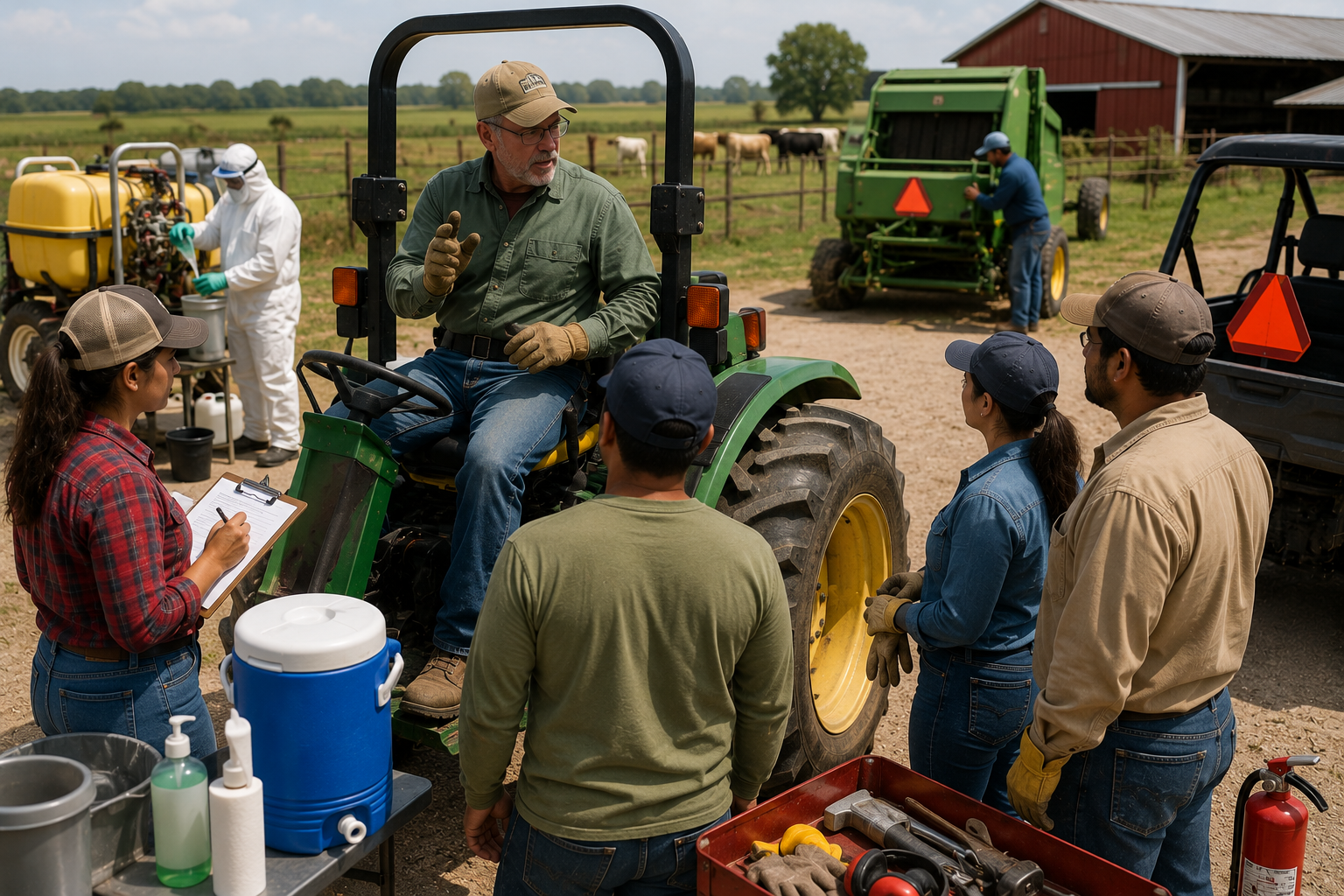



Course Description
This Farm Safety training provides an in-depth understanding of OSHA’s 29 CFR 1928 standards to protect farm workers from common agricultural hazards. Participants will learn about equipment safety, field sanitation, and compliance measures to reduce injuries, save lives, and ensure regulatory adherence.
- Introduction to Farm Safety
- Understand the unique hazards associated with agricultural operations and farm work.
- Recognize why agriculture is considered one of the most hazardous industries.
- Identify the benefits of implementing effective safety programs and maintaining regulatory compliance.
- OSHA Agricultural Safety Standards
- Review OSHA requirements applicable to agricultural operations.
- Understand the scope and application of agricultural safety regulations.
- Recognize employer and employee responsibilities for maintaining a safe farming environment.
- Scope and Applicability of Agricultural Regulations
- Understand how OSHA agricultural standards apply to crop production, livestock operations, and related activities.
- Recognize exemptions and special provisions that may apply to certain agricultural operations.
- Identify situations where additional workplace safety requirements may be applicable.
- Tractor Safety and Roll-Over Protective Structures (ROPS)
- Understand the purpose and benefits of Roll-Over Protective Structures and seat belt systems.
- Recognize the role of tractor safety equipment in reducing rollover-related injuries and fatalities.
- Apply safe operating practices when using tractors and other agricultural vehicles.
- Farm Machinery and Equipment Safety
- Identify hazards associated with agricultural machinery and powered equipment.
- Understand guarding requirements for moving machine parts, including power take-off systems and drive mechanisms.
- Recognize safe operating, maintenance, and servicing procedures for farm equipment.
- Field Sanitation and Worker Health
- Understand field sanitation requirements that support worker health and safety.
- Recognize the importance of potable water, handwashing facilities, and sanitary conditions in agricultural settings.
- Apply measures to reduce risks associated with heat stress, dehydration, and hygiene-related illnesses.
- Chemical Safety and Hazard Communication
- Recognize hazards associated with agricultural chemicals and hazardous substances.
- Understand hazard communication requirements, including labels, safety data sheets, and employee training.
- Apply safe handling, storage, and emergency response practices for agricultural chemicals.
- Specialized Agricultural Safety Requirements
- Understand safety considerations for anhydrous ammonia systems, temporary labor housing, and farm transportation operations.
- Recognize requirements for vehicle identification, traffic safety, and specialized agricultural equipment.
- Apply safe work practices that address unique agricultural hazards and operating conditions.
- Training, Inspections, and Compliance
- Understand employee training requirements related to farm machinery, equipment, and workplace hazards.
- Recognize the importance of inspections, hazard reporting, and corrective actions.
- Maintain compliance through ongoing education, communication, and safety program management.
- OSHA Enforcement and Continuous Improvement
- Understand OSHA enforcement practices and the role of state occupational safety programs.
- Recognize the importance of proactively identifying and correcting workplace hazards.
- Promote a culture of safety through continuous improvement, employee involvement, and regulatory compliance.
Certifications Obtained Upon Completion
Certificate of Completion for Farm Safety Training
Regulatory Citations
OSHA Agricultural Standards (29 CFR 1928)OSHA General Industry Standards (29 CFR 1910, limited application)OSHA General Duty Clause (Section 5(a)(1) of the Occupational Safety and Health Act)
Additional Notes
This course is ideal for farm owners, managers, and workers involved in agricultural operations.Emphasis is placed on hazard prevention, compliance with OSHA standards, and practical safety measures to protect workers and improve overall farm safety.