
Arc Flash Arc Blast (NFPA)
Course Program



Course Description
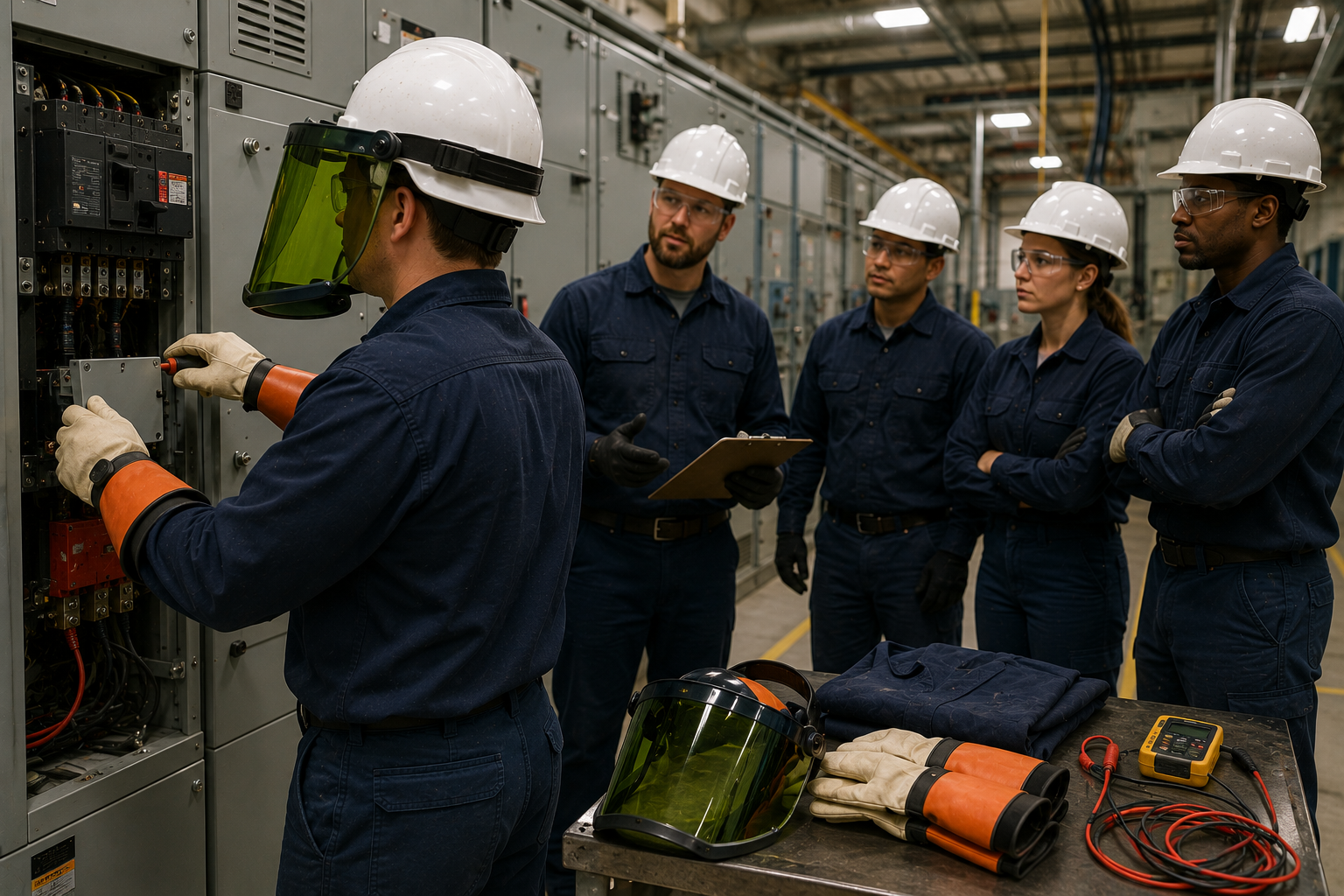
This Arc Flash and Arc Blast training provides a comprehensive overview of OSHA and NFPA standards for working safely with or near energized electrical systems. Participants will learn to identify hazards, follow proper safety protocols, and use appropriate personal protective equipment (PPE) to prevent injuries and ensure compliance with regulatory requirements.
-
Electrical Safety Regulations and Standards
- Review OSHA requirements for electrical safety in general industry and construction environments.
- Understand the purpose and application of NFPA 70E in reducing electrical hazards.
- Recognize how OSHA and NFPA standards work together to promote workplace electrical safety.
-
Arc Flash and Arc Blast Hazard Awareness
- Understand the causes and characteristics of arc flash and arc blast incidents.
- Recognize the potential consequences of electrical energy release, including burns, pressure waves, and equipment damage.
- Identify workplace conditions that may increase the risk of arc flash events.
-
Hazard Identification and Job Briefings
- Identify electrical hazards before beginning work activities.
- Understand the purpose and requirements of effective job briefings.
- Recognize the importance of communicating hazards, work procedures, and protective measures to affected personnel.
-
Working On or Near Energized Equipment
- Understand the requirements for working on or near energized electrical conductors and circuit parts.
- Learn minimum approach distances and protective boundaries designed to reduce exposure risks.
- Recognize the circumstances under which energized work may be permitted.
-
Energized Electrical Work Permits
- Understand the purpose and requirements of energized electrical work permits.
- Learn when permits are required and when exemptions may apply.
- Recognize the documentation and authorization processes necessary before performing energized work.
-
Personal Protective Equipment and Protective Measures
- Identify appropriate personal protective equipment for electrical and arc flash hazards.
- Understand the selection, use, inspection, and limitations of arc-rated clothing and protective equipment.
- Learn how protective measures reduce the risk of injury during electrical work.
-
De-Energizing, Lockout/Tagout, and Equipment Grounding
- Understand the importance of establishing an electrically safe work condition whenever possible.
- Review the relationship between NFPA 70E requirements and OSHA Lockout/Tagout procedures.
- Learn grounding, isolation, and verification practices used to protect workers from electrical hazards.
-
Electrical Equipment Inspection and Testing
- Understand inspection and testing requirements for electrical equipment and systems.
- Recognize special conditions that may require additional safeguards or protective measures.
- Learn how equipment condition affects electrical safety and reliability.
-
Electrical Troubleshooting and Diagnostic Testing
- Apply safe practices when performing electrical diagnostics and troubleshooting activities.
- Understand the hazards associated with testing energized systems.
- Recognize procedures that help minimize risk while identifying and correcting electrical problems.
-
Electrical Safety Program Best Practices
- Promote compliance through planning, training, and hazard awareness.
- Understand employee responsibilities for following safe electrical work practices.
- Support a culture of safety through continuous improvement and proactive risk management.
Certifications Obtained Upon Completion
Certificate of Completion for Arc Flash Arc Blast Safety Training
Regulatory Citations
OSHA 29 CFR 1910 Subpart S (General Industry)OSHA 29 CFR 1926 Subpart K (Construction)NFPA 70E: Standard for Electrical Safety in the WorkplaceNEC 2014: National Electrical Code
Additional Notes
This course is ideal for electricians, maintenance personnel, and anyone working with or near energized electrical systems.Emphasis is placed on hazard identification, compliance with safety standards, and the proper use of PPE to prevent arc flash and arc blast injuries.