
Ventilation Safety
Course Program
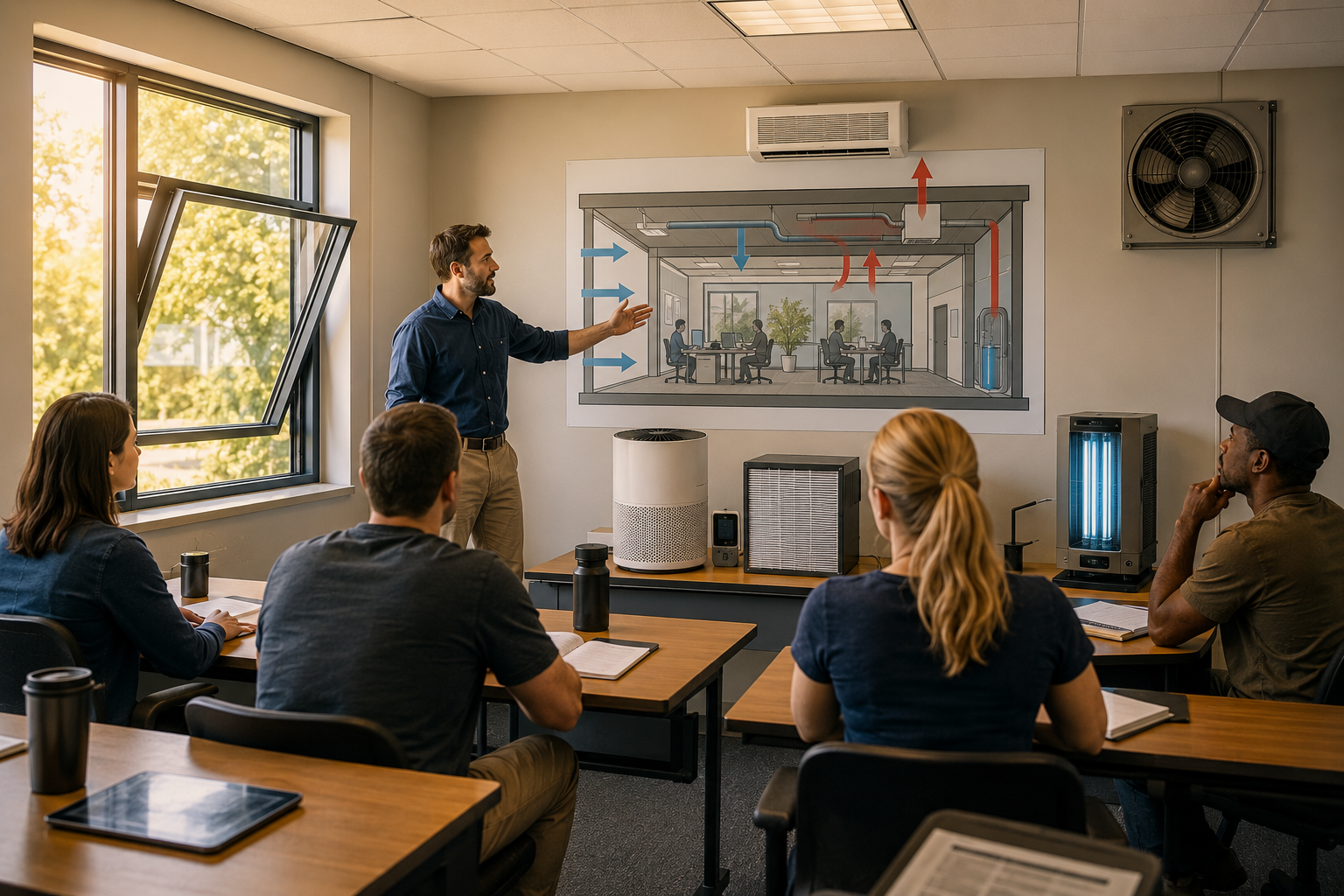



Course Description
This training provides essential knowledge on safe ventilation practices to improve indoor air quality and reduce health risks. Participants will learn to implement effective ventilation strategies, monitor air quality, and comply with OSHA standards to create safer environments.
- Role of ventilation in reducing airborne viruses and indoor pollutants
- Health impacts of poor indoor air quality, including illnesses and hospitalizations
- Bringing in fresh outdoor air and removing stale air
- Using filtration systems to trap particles and contaminants
- Combining ventilation methods for optimal results
- Opening windows and using exhaust fans to increase airflow
- Running HVAC systems with high-efficiency filters (MERV 13+)
- Using portable HEPA air cleaners for additional filtration
- Benefits of HEPA filters and UV germicidal irradiation (UVGI)
- Avoiding unproven or harmful air cleaning technologies
- Using CO2 monitors to assess ventilation effectiveness
- Setting occupancy limits based on ventilation capacity
- Maintaining HVAC systems with regular inspections and filter changes
- Avoiding unsafe practices like opening windows in hazardous conditions
- Ensuring proper exhaust air discharge and local exhaust ventilation in workplaces
- Using HVAC systems for directional airflow and pressure differentials
- Negative and positive pressure room applications for infection control
- Continuous ventilation and filtration to protect staff and patients
- Case studies on how improved ventilation reduces virus transmission and health risks
Certifications Obtained Upon Completion
Certificate of Completion for Ventilation Safety Training
Regulatory Citations
OSHA 29 CFR 1910.94: Ventilation Standards for Dust, Fumes, and GasesOSHA 29 CFR 1910.1000: Air ContaminantsASHRAE Standards for Indoor Air Quality and Ventilation
Additional Notes
This course is ideal for facility managers, healthcare workers, and anyone responsible for maintaining safe indoor environments.Emphasis is placed on practical ventilation strategies, compliance with safety standards, and fostering a culture of health and safety.