
Handling Radioactive Materials Packages
Course Program



Course Description
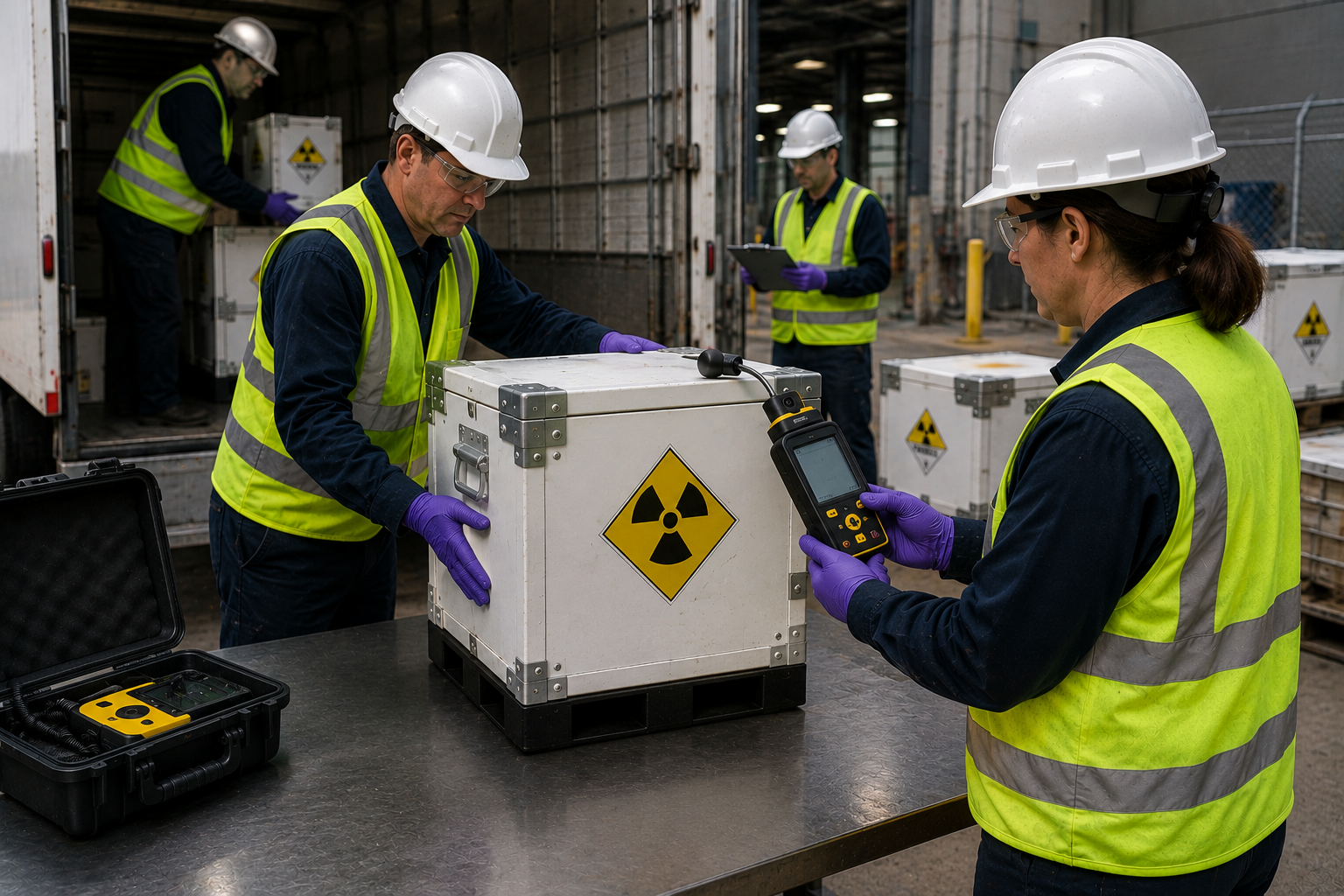
This training provides essential knowledge for safely handling, inspecting, and transporting radioactive materials packages. Participants will learn about regulatory requirements, package labeling, safe handling principles, and emergency response to ensure compliance and minimize radiation exposure.
-
Introduction to Radioactive Material Transportation
- Understand the purpose and importance of safely transporting radioactive materials.
- Identify common radioactive materials used in medical, industrial, research, and commercial applications.
- Recognize the different types of packages used to transport radioactive materials safely.
-
Regulatory Requirements and Compliance
- Review the regulatory requirements governing the transportation of radioactive materials.
- Understand the roles of federal agencies and industry standards in ensuring transportation safety.
- Learn packaging, labeling, documentation, and transportation requirements for various modes of transport.
-
Types of Radioactive Material Packages
- Identify the classifications of radioactive material packages and their intended uses.
- Understand the purpose and limitations of Excepted, Industrial, Type A, Type B, and Type C packages.
- Recognize how package design protects workers, the public, and the environment during normal and accident conditions.
-
Recognizing Labels, Markings, and Documentation
- Interpret radioactive material labels, markings, and shipping information.
- Understand the significance of radiation level categories and package identification markings.
- Recognize documentation requirements used to support safe transportation and regulatory compliance.
-
Safe Handling and Radiation Protection Principles
- Apply fundamental radiation protection principles to minimize exposure during handling and transport activities.
- Understand the importance of time, distance, and shielding in reducing radiation exposure.
- Learn safe storage, loading, unloading, and transportation practices for radioactive materials.
-
Receiving and Inspecting Radioactive Packages
- Perform visual inspections to identify signs of package damage or potential contamination.
- Understand radiation survey and dose-rate measurement requirements.
- Review procedures for documenting inspections and maintaining compliance records.
-
Emergency Response and Incident Management
- Recognize appropriate actions to take when damaged packages, leaks, or spills are discovered.
- Understand emergency notification and reporting procedures.
- Learn how to coordinate with radiation safety personnel and emergency responders during an incident.
-
Medical, Industrial, and Research Applications
- Explore how radioactive materials are used in healthcare, scientific research, and industrial operations.
- Understand the transportation requirements associated with different applications.
- Recognize the importance of maintaining safety throughout the supply chain.
-
Best Practices for Safe Transportation
- Implement safe work practices that support regulatory compliance and radiation protection.
- Understand the responsibilities of personnel involved in shipping, receiving, and handling radioactive materials.
- Promote a culture of safety through training, communication, and continuous improvement.
Certifications Obtained Upon Completion
Certificate of Completion for Handling Radioactive Materials Packages Training
Regulatory Citations
U.S. Department of Transportation (DOT) Hazardous Materials Regulations (49 CFR Parts 171-180)Nuclear Regulatory Commission (NRC) Packaging and Transportation StandardsOSHA Standards for Ionizing Radiation (29 CFR 1910.1096)
Additional Notes
This course is ideal for workers involved in the handling, transport, or inspection of radioactive materials in industries such as healthcare, research, and waste management.Emphasis is placed on safety, compliance, and minimizing radiation exposure to protect workers and the public.