
Hazardous Materials Storage
Course Program



Course Description
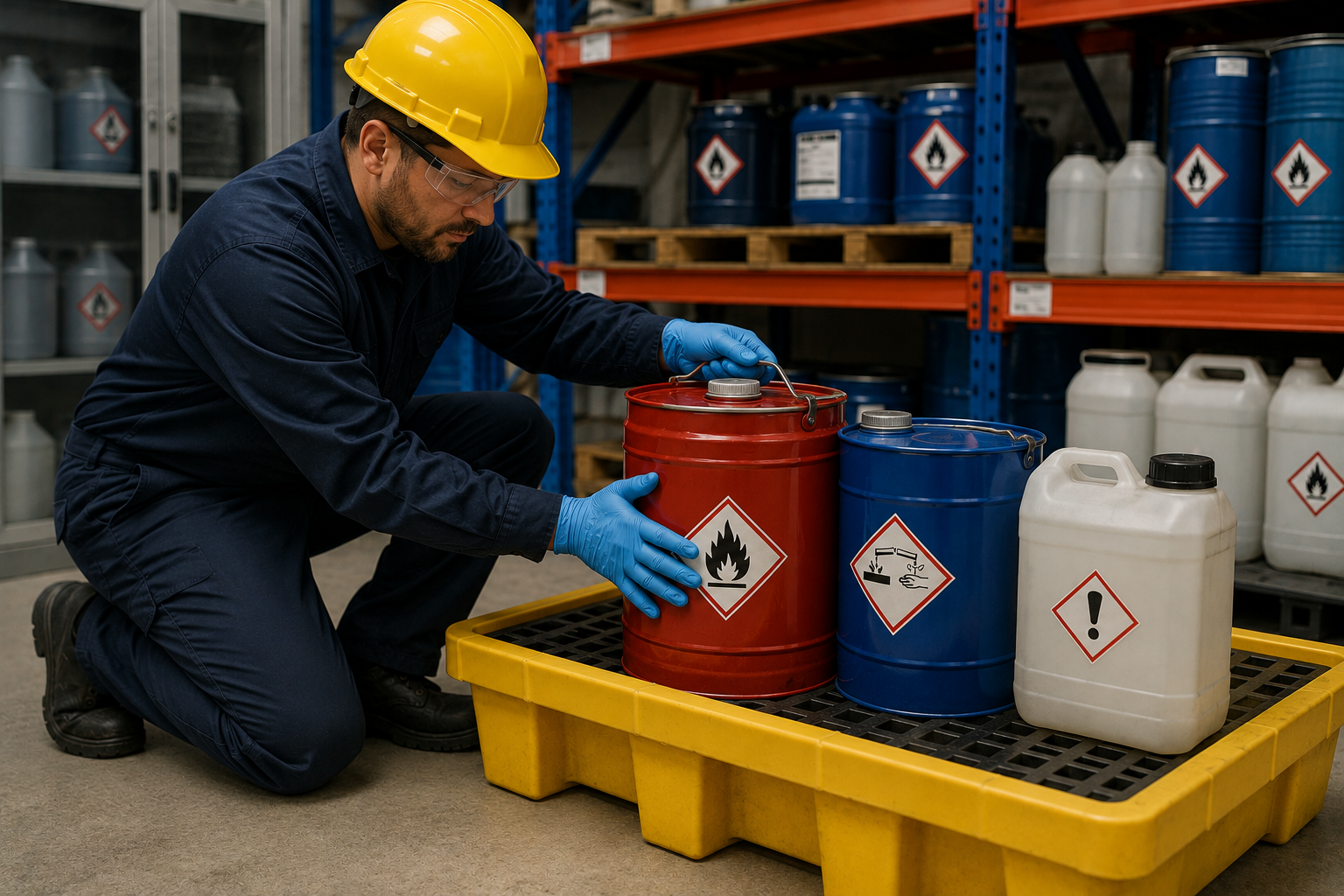
This training provides essential knowledge for safely storing hazardous materials in compliance with OSHA and EPA regulations. Participants will learn best practices for hazard identification, storage requirements, and emergency preparedness to ensure workplace safety and environmental protection.
-
Introduction to Hazardous Materials Storage
- Understand the types of hazardous materials commonly stored in workplace environments.
- Recognize the risks associated with improper storage of hazardous substances.
- Identify the importance of safe storage practices in protecting employees, property, and the environment.
-
Regulatory Requirements and Compliance
- Review regulatory requirements governing the storage of hazardous materials and hazardous waste.
- Understand employer responsibilities for maintaining compliance with applicable safety and environmental regulations.
- Recognize the role of workplace procedures and documentation in supporting compliance efforts.
-
Hazard Identification and Classification
- Identify hazardous materials through labels, Safety Data Sheets (SDS), and hazard communication systems.
- Recognize physical, health, and environmental hazards associated with stored chemicals.
- Apply hazard recognition techniques to support safe storage and handling practices.
-
Safe Storage Practices
- Understand best practices for storing hazardous materials safely and securely.
- Recognize storage requirements designed to minimize exposure, contamination, and accidental releases.
- Apply procedures that reduce the risk of incidents involving hazardous substances.
-
Chemical Labeling and Segregation
- Understand the importance of proper labeling for hazardous materials and waste containers.
- Recognize the need to segregate incompatible materials to prevent dangerous reactions.
- Apply labeling and segregation practices that support workplace safety and regulatory compliance.
-
Storage Compatibility and Secondary Containment
- Identify compatibility considerations when storing hazardous chemicals.
- Understand the purpose and function of secondary containment systems.
- Recognize methods used to control leaks, spills, and accidental releases.
-
Hazard Assessments and Risk Management
- Conduct hazard assessments to identify risks within hazardous material storage areas.
- Evaluate storage conditions and operational practices that may contribute to incidents.
- Implement risk management strategies that reduce hazards and improve safety performance.
-
Spill Prevention and Emergency Response
- Understand procedures for responding to hazardous material spills and releases.
- Recognize the proper use of spill response equipment and containment materials.
- Apply emergency response practices that protect personnel and minimize environmental impacts.
-
Fire Prevention and Emergency Preparedness
- Identify fire hazards associated with flammable and combustible materials.
- Understand fire prevention measures and emergency response procedures.
- Recognize the importance of evacuation planning, emergency communication, and incident coordination.
-
Training, Inspections, and Continuous Improvement
- Understand employee responsibilities for safe hazardous material storage and reporting unsafe conditions.
- Support compliance through training, inspections, and routine monitoring of storage areas.
- Promote a culture of safety through hazard awareness, proactive risk management, and continuous improvement.
Certifications Obtained Upon Completion
Certificate of Completion for Hazardous Materials Storage Training
Regulatory Citations
OSHA Hazardous Materials Standards (29 CFR 1910.106 and 29 CFR 1910.120)EPA Resource Conservation and Recovery Act (RCRA)DOT Hazardous Materials Regulations (49 CFR Parts 171-180)
Additional Notes
This course is ideal for employees responsible for handling and storing hazardous materials in industries such as manufacturing, transportation, and warehousing.Emphasis is placed on compliance, risk prevention, and emergency response to ensure a safe and secure workplace.