Fall Protection/Competent Person
Course Program



Course Description
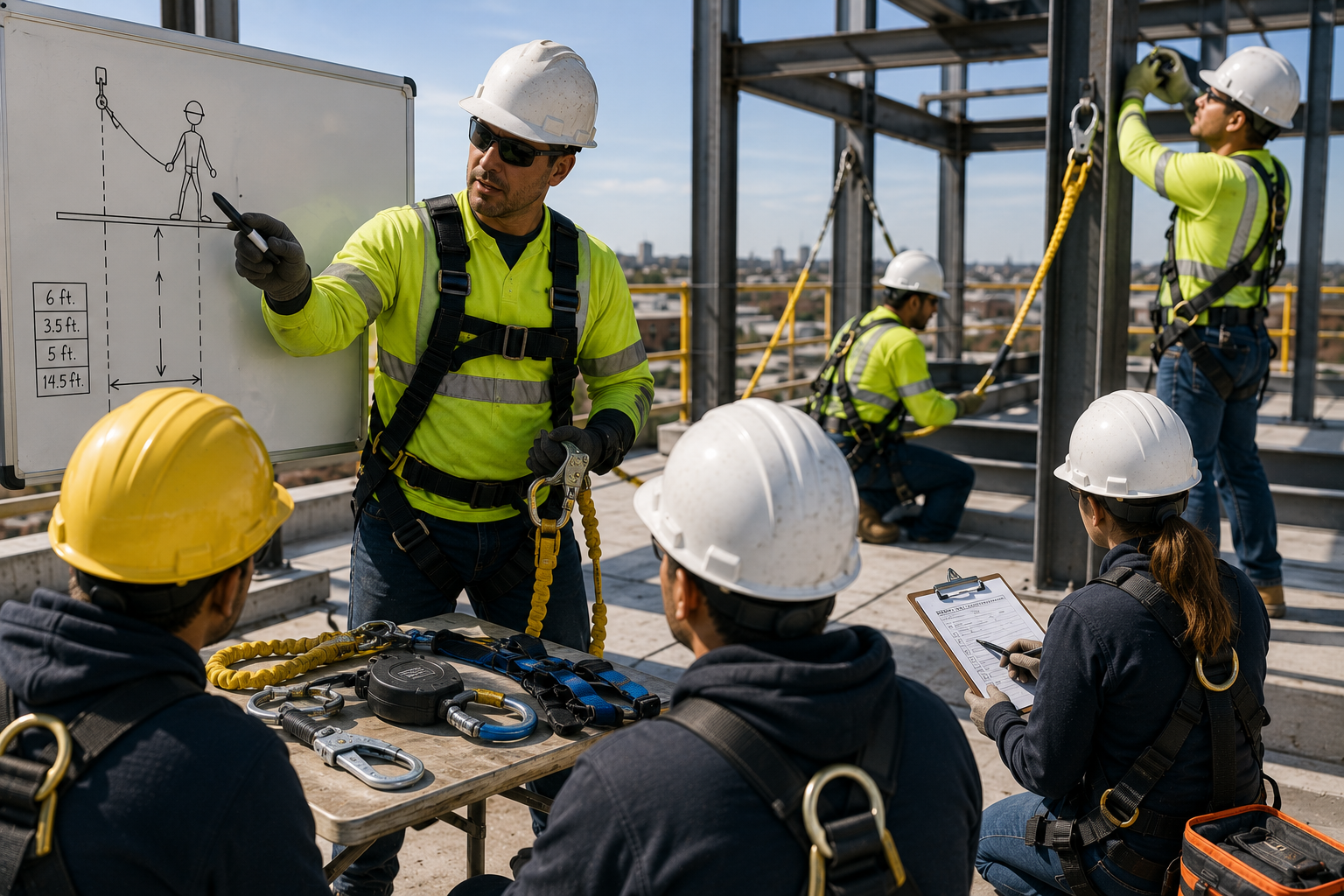
This Fall Protection/Competent Person training provides in-depth knowledge and hands-on exercises for individuals designated as Competent Persons (CP) in fall protection. Participants will learn to identify, evaluate, and control fall hazards, perform hazard analyses, and implement effective fall protection systems in compliance with OSHA standards.
-
Competent Person Responsibilities in Fall Protection
- Understand the role and responsibilities of the Competent Person in fall protection programs.
- Recognize authority and accountability for identifying hazards and implementing corrective actions.
- Apply regulatory requirements and best practices to maintain a safe work environment.
-
Fall Protection Fundamentals
- Understand the need for fall protection in elevated work environments.
- Recognize common causes of falls and fall-related injuries in the workplace.
- Differentiate between fall prevention and fall protection strategies.
-
Fall Hazard Recognition and Analysis
- Identify fall hazards associated with various work tasks, equipment, and jobsite conditions.
- Conduct hazard assessments to evaluate fall risks and determine appropriate controls.
- Apply hazard analysis techniques to support safe work planning and execution.
-
Fall Protection Planning and Control Measures
- Develop effective fall protection solutions based on task-specific hazards.
- Implement engineering controls, administrative controls, and personal protective measures.
- Ensure fall protection systems are properly selected and applied to workplace conditions.
-
Fall Clearance and Total Fall Distance Calculations
- Understand the factors that contribute to total fall distance.
- Calculate required fall clearance to prevent contact with lower levels or obstacles.
- Recognize how equipment selection and anchorage location affect fall protection performance.
-
Personal Fall Arrest Systems (PFAS)
- Understand the components and operation of personal fall arrest systems.
- Inspect, don, adjust, and use fall protection equipment correctly.
- Recognize equipment limitations, inspection requirements, and removal-from-service criteria.
-
Equipment Selection, Care, and Maintenance
- Select appropriate fall protection equipment for specific tasks and hazards.
- Understand proper storage, care, and maintenance procedures for fall protection equipment.
- Recognize signs of damage, wear, and deterioration that may affect equipment performance.
-
Fall Protection Applications
- Apply fall protection requirements to aerial lifts, ladders, and other elevated work activities.
- Recognize unique hazards associated with various access and work platforms.
- Implement safe work practices that reduce fall exposure in diverse work environments.
-
Rescue Procedures and Fall Response
- Understand the importance of prompt rescue planning for fall incidents.
- Recognize procedures for self-rescue, assisted self-rescue, and emergency response.
- Apply appropriate first-on-the-scene actions and fall victim care considerations.
-
Practical Hazard Evaluation and Safety Leadership
- Perform task-based fall hazard evaluations and practical risk assessments.
- Develop corrective actions to address identified hazards and unsafe conditions.
- Promote a culture of safety through leadership, communication, and continuous improvement.
Certifications Obtained Upon Completion
Certificate of Completion for Fall Protection/Competent Person Training
Regulatory Citations
OSHA Fall Protection Standards (29 CFR 1926 Subpart M)OSHA Personal Protective Equipment Standards (29 CFR 1910 Subpart I)ANSI Z359 Fall Protection Code
Additional Notes
This course is ideal for individuals designated as Competent Persons responsible for fall protection in their workplace.Emphasis is placed on hazard recognition, system implementation, and rescue procedures to ensure a safe and compliant work environment.